
THERMAL PLASMA TECHNOLOGY
Understanding the treatment process.
Our approach combines a plasma reactor with rapid cooling and downstream gas treatment. The full system — not the reactor alone — determines treatment performance.
Benefits Industries Applications REFRIGERANTS & INDUSTRIAL GAS RESIDUES
The complete treatment process
Follow the numbered stages from top to bottom. Side arrows show recovered heat and the streams collected during treatment.
01
Waste reception & controlled feed
Gases, liquids and slurries, including refrigerants and industrial gas residues, according to the system design.
02
Thermal plasma reactor
Waste is fed into the reactor. Electricity and compressed air generate plasma to break down organic compounds in a controlled thermal process.
03
Rapid cooling
The process gas is cooled rapidly to limit unwanted secondary reactions.
Heat recovery — where designed
Process heat can be recovered for reuse where the system design allows.
04
Acid gas absorption & treatment
Acid gases are captured in an aqueous absorption system. Chemical neutralization is added where needed.
Aqueous stream from absorption
An acid solution or scrubbing liquid, depending on the waste composition and treatment method.
Product recovery & reuse
An acid solution can be recovered as a useful product when its composition and purity meet the intended-use requirements.
Liquids, salts & treatment residues
Scrubbing liquids, neutralization salts and captured residues are directed to appropriate treatment or reuse where suitable.
05
Final gas cleaning & process control
Additional cleaning and process monitoring before controlled discharge, according to the emission requirements applicable at the site.
TREATMENT OUTPUT
Gas after treatment
Includes carbon dioxide (CO₂) and water vapor from treating organic waste. Final composition depends on the feed and operating conditions.
Product composition, recovery options and treatment requirements depend on the waste stream and system configuration.
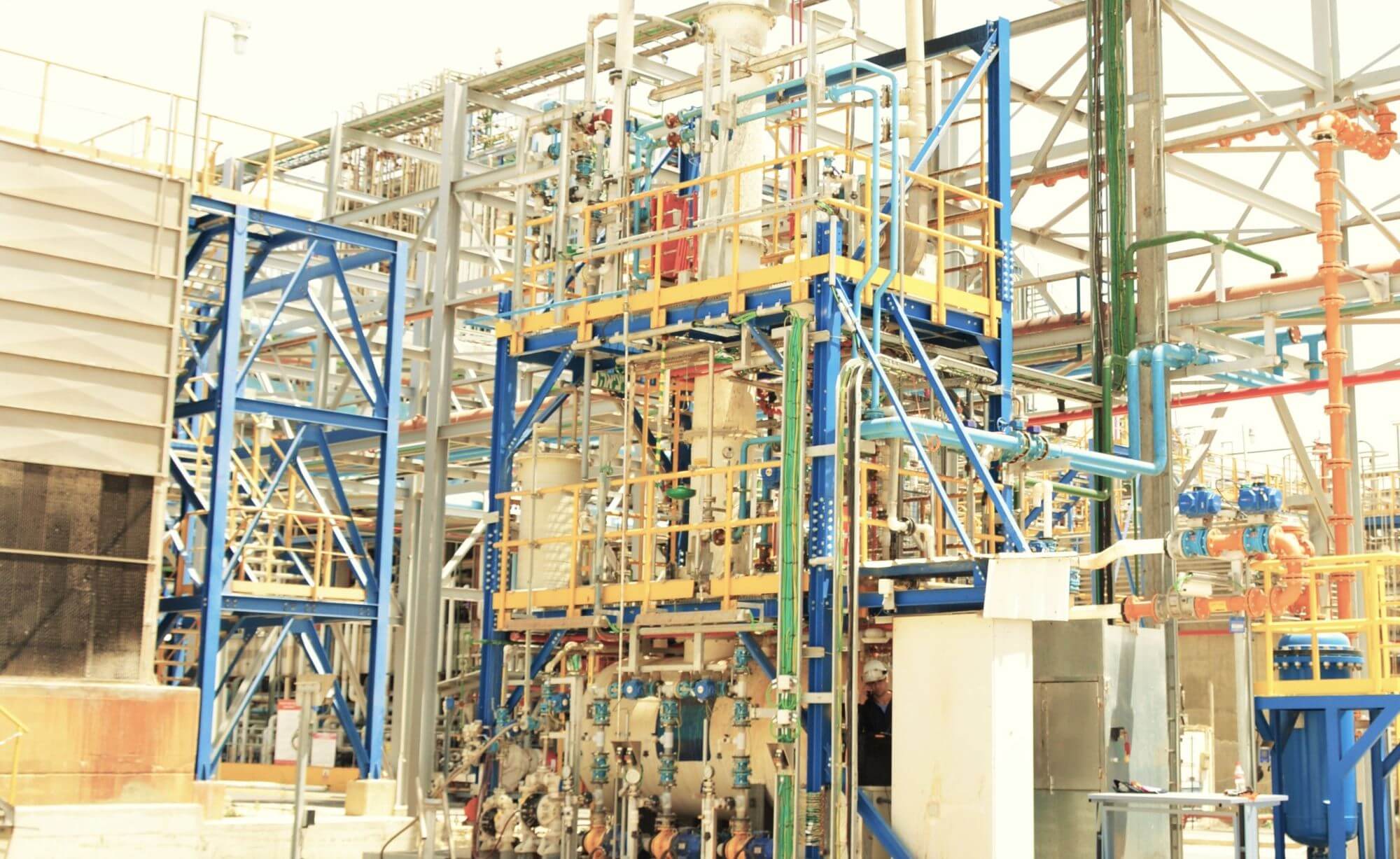
1. Controlled thermal treatment
Waste is introduced into a high-temperature treatment environment. Operating conditions are selected for the feed composition, flow rate and required performance. Torch temperature alone does not establish destruction efficiency.
2. Rapid cooling
Hot process gas is cooled rapidly. This stage helps limit unwanted secondary reactions and prepares the gas for downstream treatment.
3. Acid gas treatment & gas cleaning
Treatment of halogenated organic compounds can produce acid gases such as hydrogen chloride or hydrogen fluoride. These require appropriate capture and, where needed, chemical neutralization. Cooling, absorption and neutralization have distinct functions.
4. Application-specific performance
Destruction efficiency, emissions, utility consumption and capacity must be established for the specific waste stream and operating conditions. Compliance is evaluated against applicable site and jurisdiction requirements.
5. Residues & potential recovery
Scrubbing liquids, salts and other process residues require appropriate management. Recovery of useful by-products may be possible for selected applications, depending on composition, purity and an identified use.
To evaluate a specific material, contact us with its composition and expected quantity.