CLEANTECH · PROPRIETARY PLASMA TECHNOLOGY
Advanced treatment for hazardous waste.
Sense Environment is a global cleantech company implementing innovative, proprietary environmental solutions through novel approaches to the application of thermal plasma technology. We address hazardous organic waste, end-of-life refrigerants and industrial gas residues.
OUR SOLUTIONS
What do you need to treat?
Start with the material and the challenge. We assess its composition, volume and treatment requirements to identify a suitable solution.
01
End-of-life refrigerants
Treatment of refrigerants that are no longer suitable for reuse, with a focus on controlled destruction of environmentally harmful compounds.
02
Industrial gases & emissions
Treatment systems for hazardous organic gas streams, including halogenated compounds and concentrated process emissions.
03
Hazardous organic waste
Plasma-based systems for liquid and slurry organic waste, including challenging halogenated streams. System design is tailored to the feed material.
WHY SENSE ENVIRONMENT
Designed for waste streams that need a different approach.
Our systems offer direct, versatile treatment of hazardous organic waste — from gases to liquids and slurries, including highly concentrated and halogenated streams. Integration into production without prior dilution, on-demand operation and automated control deliver efficient treatment, resource savings and less reliance on off-site disposal.
01
Concentrated & halogenated streams
Direct treatment of highly concentrated organic streams and challenging halogenated compounds without prior dilution. The system is engineered for the feed composition and halogen load.
02
Treatment at the source
Integrating our systems into production eliminates the need to transport untreated waste off-site for primary treatment and reduces reliance on transport, logistics and payments to an external treatment facility.
03
A versatile treatment solution
Flexibility across a wide range of organic waste — gases, liquids and slurries — with systems adapted to changes in composition and concentration.
04
Fast start-up & on-demand operation
Rapid start-up aligns treatment with production cycles and lets the system operate when needed, reducing energy and utility use during idle periods.
05
Automation & process control
Integrated monitoring and automated control simplify operation and reduce the need for continuous operator involvement.
06
Using the energy in waste
The energy content of organic constituents contributes to the heat balance and reduces external energy demand, according to the properties of the waste stream.
07
An integrated environmental solution
Destruction of hazardous compounds, rapid cooling and gas cleaning work together in one system, engineered for the application’s emission and environmental requirements.
08
Long-term project economics
On-site treatment, automation and resource efficiency reduce operating and logistics costs and support an attractive return on investment, based on the project’s operating data.
09
Recycling & heat recovery
Design and supply of a solution that aims to maximise the use of process residues through recycling and heat recovery.
10
Small footprint, efficient use of space
The systems have relatively small dimensions and require little space for installation and operation, making them easy to integrate into customer sites.
Environmental value. Additional economic potential.
Our solutions are designed to reduce the environmental impact of hazardous waste. Destroying high-global-warming-potential refrigerants prevents their release to the atmosphere and enables substantial greenhouse gas emission reductions, measured in carbon dioxide equivalents (CO₂e). Treatment at the source, use of the energy in waste and heat recovery also help reduce transport, fuel consumption and CO₂ emissions.
In eligible projects, these emission reductions can generate Carbon Credits and create an additional revenue stream. Eligibility depends on the applicable methodology, the source and type of gas, process documentation and independent verification of the reductions.
OUR SYSTEMS
See the technology in practice.
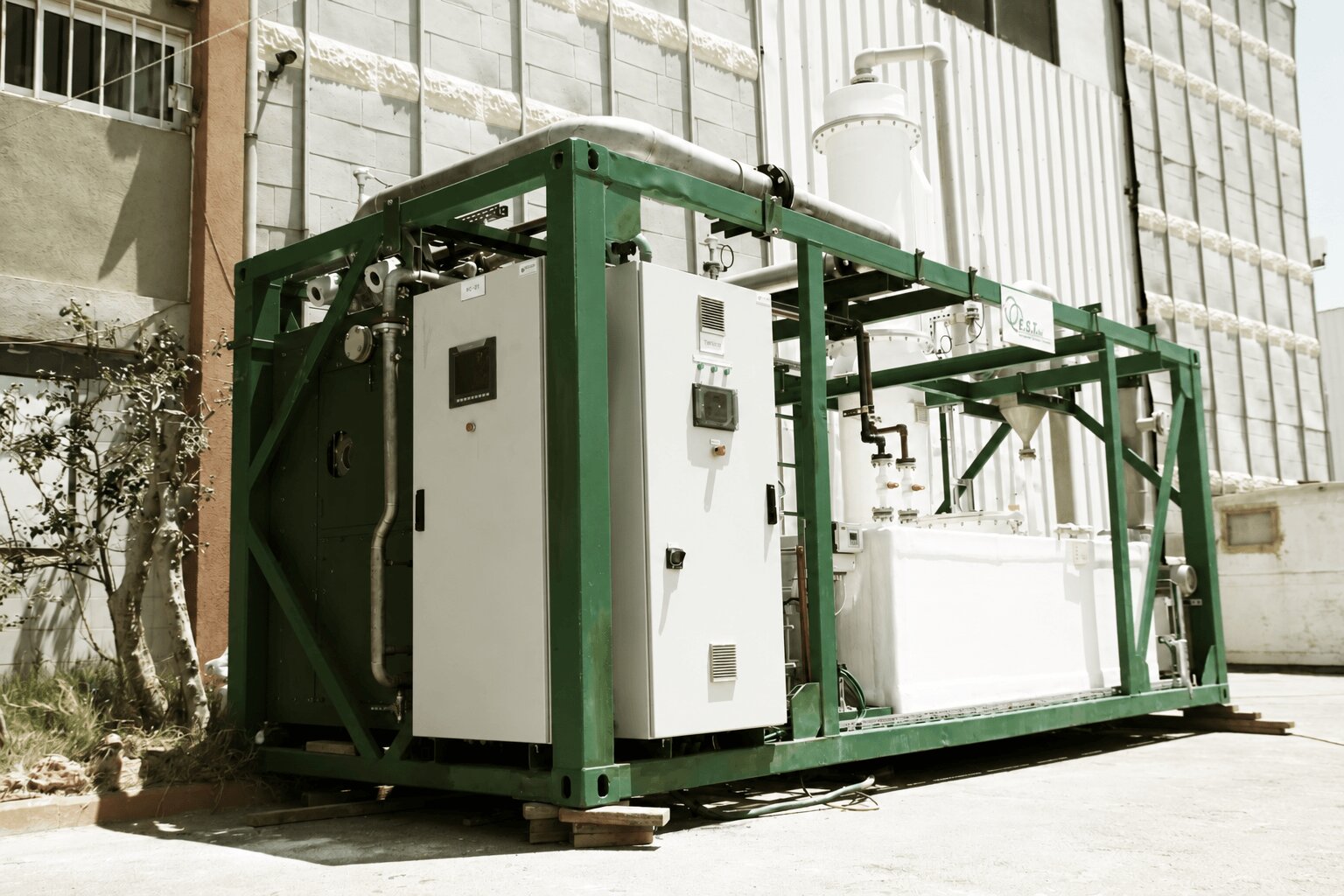
Explore treatment systems and configurations presented by Sense Environment.
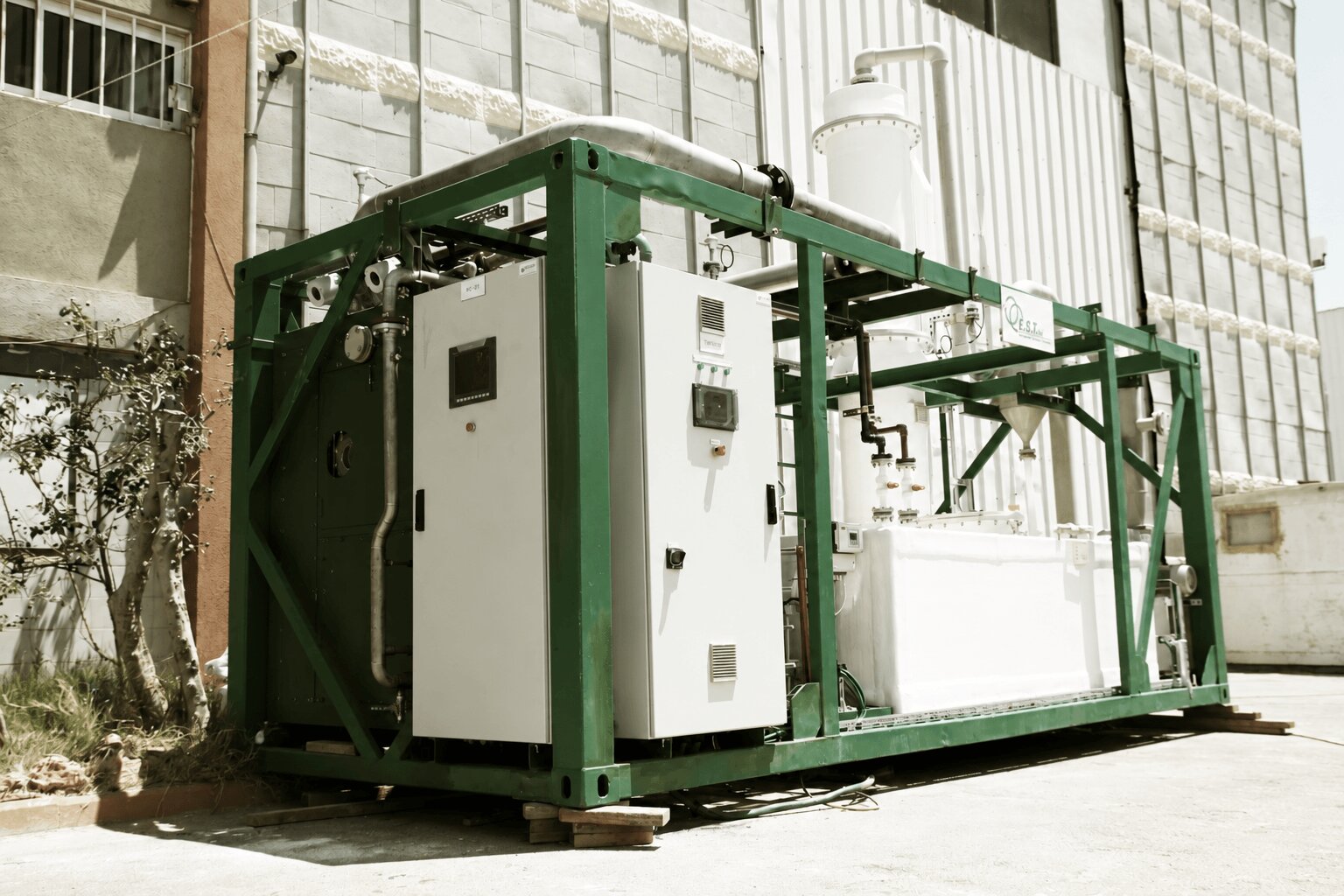
Waste gas treatment system
A dedicated system for treating hazardous organic gas streams.
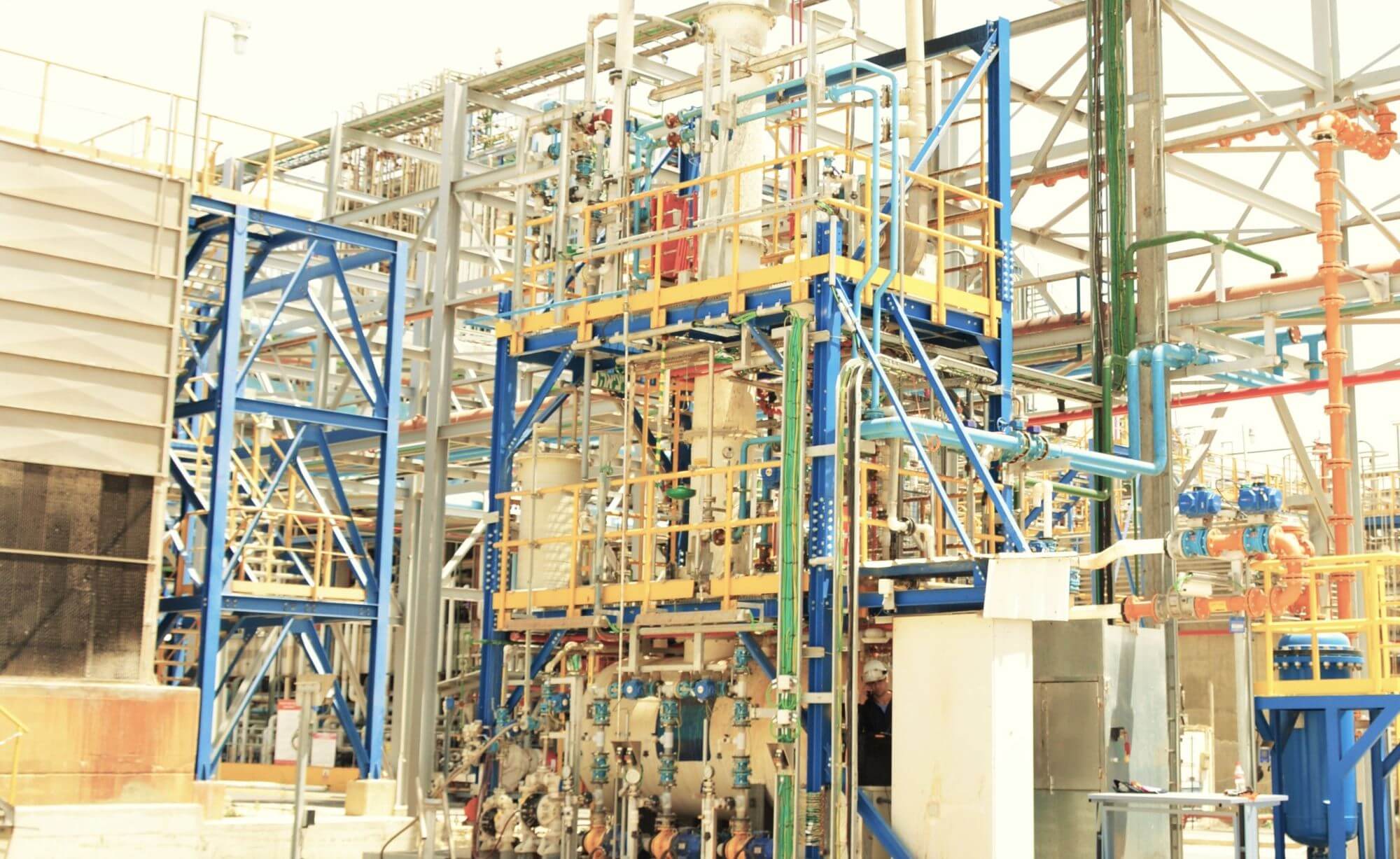
Liquid waste treatment system
A system configuration for hazardous organic liquids and slurries.
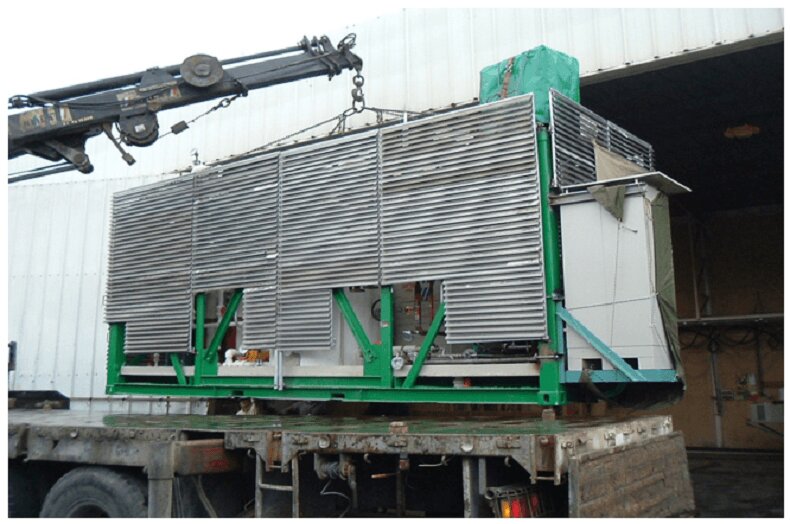
Mobile treatment systems
Mobile treatment systems for dedicated applications and sites with limited space.
HOW IT WORKS
Advanced technology.
A clear process.
Thermal plasma treatment is combined with downstream cooling and gas cleaning. Each stage is designed around the waste composition and operating requirements.
The complete treatment process
Follow the numbered stages from top to bottom. Side arrows show recovered heat and the streams collected during treatment.
01
Waste reception & controlled feed
Gases, liquids and slurries, including refrigerants and industrial gas residues, according to the system design.
02
Thermal plasma reactor
Waste is fed into the reactor. Electricity and compressed air generate plasma to break down organic compounds in a controlled thermal process.
03
Rapid cooling
The process gas is cooled rapidly to limit unwanted secondary reactions.
Heat recovery — where designed
Process heat can be recovered for reuse where the system design allows.
04
Acid gas absorption & treatment
Acid gases are captured in an aqueous absorption system. Chemical neutralization is added where needed.
Aqueous stream from absorption
An acid solution or scrubbing liquid, depending on the waste composition and treatment method.
Product recovery & reuse
An acid solution can be recovered as a useful product when its composition and purity meet the intended-use requirements.
Liquids, salts & treatment residues
Scrubbing liquids, neutralization salts and captured residues are directed to appropriate treatment or reuse where suitable.
05
Final gas cleaning & process control
Additional cleaning and process monitoring before controlled discharge, according to the emission requirements applicable at the site.
TREATMENT OUTPUT
Gas after treatment
Includes carbon dioxide (CO₂) and water vapor from treating organic waste. Final composition depends on the feed and operating conditions.
Product composition, recovery options and treatment requirements depend on the waste stream and system configuration.
01
Thermal treatment
High-temperature plasma breaks down hazardous organic compounds in a controlled reactor.
02
Rapid cooling
The process gas is cooled rapidly to help limit the formation of unwanted by-products.
03
Gas cleaning
Acid gases and other relevant pollutants are treated before discharge, with controls matched to the application.
INDUSTRIES & SECTORS
From manufacturing processes to end-of-life gases.
Our solutions address process emissions, spent solvents and other challenging waste streams across these industries and activities.
Pharmaceuticals & API manufacturing
Batch reactors, solvent-intensive synthesis and changing production campaigns. Typical applications include process emissions and spent solvent mixtures.
Chemicals & specialty chemicals
Organic vapours, halogenated compounds and concentrated solvent wastes from synthesis and chemical processing.
Petrochemicals, refineries & fuel additives
Hydrocarbon vapours and solvent-containing process streams, including selected chlorinated compounds and mixed organic wastes.
Paints, coatings & formulation
Organic solvent vapours and solvent-containing residues from manufacturing, formulation and equipment cleaning.
Crop protection & agrochemicals
Organic production waste, including halogenated compounds, solvent mixtures and pumpable slurries.
Refrigeration & refrigerant management
Recovered, contaminated, mixed or end-of-life refrigerants that require destruction rather than further reuse.
Industrial gas supply & handling
Selected residual gases and mixtures from cylinders, filling operations, storage and production, evaluated against their composition and hazards.
Waste management & treatment operators
Dedicated treatment projects for collected hazardous organic waste and gases, and partnerships to develop appropriate treatment capacity.
EXAMPLE APPLICATIONS
The materials behind the solution.
Examples drawn from our industrial applications, together with refrigerant and residual-gas treatment streams. Each feed is characterised before a treatment route is selected.
| Industry / activity | Waste form | Example materials | Treatment application |
|---|---|---|---|
| Pharmaceutical / API | Gas | Methyl chloride; methyl bromide; organic solvent vapours | Control of process emissions |
| Chemical manufacturing | Gas | Methylene chloride (DCM); allyl chloride; isopropanol (IPA) | Treatment of hazardous organic vapours |
| Fuel additives / petrochemicals | Gas | n-Hexane; n-octane; dichloropropane; chlorinated hydrocarbons | Control of hydrocarbon and halogenated emissions |
| Pharmaceuticals / chemicals | Liquid | DCM; methanol; ethanol; acetone; toluene; ethyl acetate; butanol; n-heptane; MTBE | Treatment of spent solvents and mixed solvent wastes |
| Pharmaceutical synthesis | Liquid / mixtures | Acetic acid; piperidine; benzoyl chloride; solvent-containing aqueous mixtures | Treatment of complex organic production residues |
| Crop protection | Slurry | Chlorinated organic solids in toluene-based streams | Treatment of pesticide-production waste |
| Refrigerant management | Recovered gases / liquid refrigerants | CFC, HCFC and HFC families; selected refrigerant mixtures | Destruction of refrigerants unsuitable for reuse |
| Industrial gas operations | Residual gases / mixtures | Halogenated organic gas residues, process gases and solvent vapours from cylinders and handling operations | Controlled treatment of residual gas streams |
The examples describe feed categories, not interchangeable operating specifications. Composition, contaminants, quantity and phase determine the appropriate system and treatment conditions.
REFRIGERANTS & INDUSTRIAL GAS RESIDUES
A treatment route for gases that cannot stay in circulation.
Gas treatment starts with identifying what is in the cylinder or process stream, and whether recovery or destruction is appropriate.
End-of-life refrigerants
Recovered refrigerants can become unsuitable for reuse because of contamination, mixing or degradation. We assess these materials for controlled plasma-based destruction.
- CFC and HCFC refrigerants, such as R-12 and R-22.
- HFC refrigerants, such as R-134a.
- Selected blends, such as R-404A and R-410A.
- Contaminated or mixed recovered refrigerants requiring characterisation.
Industrial gas residues
Residual gas remains after filling, storage, process use or cylinder retirement. The treatment approach is matched to the identified hazardous constituents.
- Residual halogenated organic gases in cylinders and storage vessels.
- Mixed process gases and organic solvent vapours.
- Gas streams generated during industrial production or maintenance.
- Mixed or unidentified residues requiring analysis before treatment.
Tell us the gas identity or composition, approximate quantity, cylinder or storage format and location. These details allow an initial assessment of the treatment route.
WATCH & EXPLORE
Meet the technology.
Two films from Sense Environment about the treatment approach and plasma technology.
Treating chemical hazardous waste at the source
Sense Environment plasma technology
ABOUT SENSE ENVIRONMENT
Environmental innovation, developed in-house.
Sense Environment is a global cleantech company implementing innovative, proprietary environmental solutions through novel approaches to the application of thermal plasma technology. We focus on challenging waste and gas streams, including highly concentrated halogenated organic compounds.
We combine technology development with waste-stream assessment, testing, system engineering, commissioning and ongoing support. Solutions can be integrated into industrial production or configured for dedicated treatment applications. Selected projects may also allow recovery of useful by-products.
LET’S TALK
Tell us what you need to treat.
Share your contact details and a brief description of your needs. Include the material type, composition, approximate quantity and project location if available.
Email our team